Identification of Organic Compound Functional Groups through Solubility Assays and pH Analysis
Keywords:
organic compounds, functional groups, solubility test, pH analysis, qualitative analysisAbstract
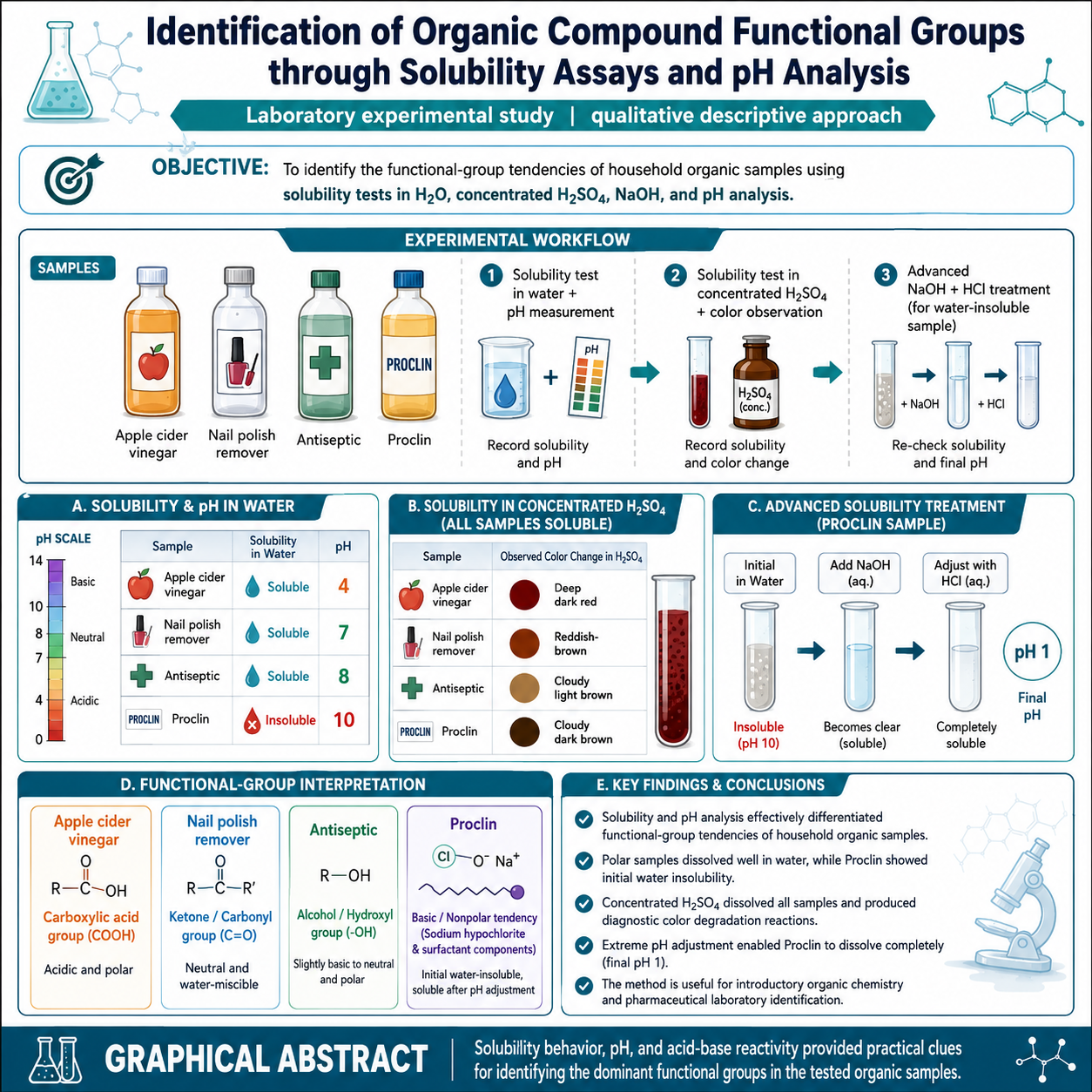
Identification of functional groups in organic compounds is a qualitative method used to predict chemical characteristics based on solubility behavior, pH, and visual reaction changes. This study aimed to identify functional group tendencies in commercial organic samples consisting of apple cider vinegar, nail polish remover, antiseptic liquid, and Proclin using solubility assays and pH analysis. The study applied a laboratory experimental design with a qualitative descriptive approach and was conducted at the Laboratory of Natural Products Pharmacy, Department of Pharmacy, Faculty of Sports and Health, Universitas Negeri Gorontalo. Each sample was tested using distilled water, concentrated sulfuric acid (H2SO4), sodium hydroxide (NaOH), and hydrochloric acid (HCl) when required. Apple cider vinegar, nail polish remover, and antiseptic liquid dissolved homogeneously in water with pH values of 4, 7, and 8, respectively, indicating acidic carboxylic acid, carbonyl/ketone, and hydroxyl/alcohol functional group characteristics. Proclin was insoluble in water and showed a basic pH of 10, but became soluble after NaOH addition and HCl adjustment under strongly acidic conditions (pH 1). All samples dissolved in concentrated H2SO4 and produced dark color changes, indicating dehydration or carbonization reactions. These findings show that solubility assays combined with pH analysis provide a simple and effective preliminary method for identifying functional group tendencies in household organic samples.
Downloads